
Power of the Lords of Hell
Patch 2.7.1 kicked off Season 25 – Soul Shards (officially "The Lords of Hell") on December 10, 2021. The theme revolves around seven Soul Shards, each torn from one of the Lords of Hell — the three Prime Evils and four Lesser Evils of the Diablo universe. Every shard embodies a demonic domain such as Destruction, Hatred, Terror, Sin, Lies, Pain or Anguish, granting your hero a build-defining power that reaches far beyond ordinary item affixes.
The shards split into two groups: three Prime Evil shards slot into your helm, while four Lesser Evil shards slot into a weapon. You may only equip one Prime and one Lesser shard at a time — and the pairing of those two largely defines your play style. Crucially, unlike ordinary buff items, every shard carries a meaningful downside. For each powerful effect there is a clear drawback, turning shard selection into a genuine decision rather than pure stat-stacking.
Seven shards, two sockets, one hero: Season 25 turned the endgame into a puzzle of risk and reward.
Historical context: a theme with substance
Season 25 landed in the late phase of Diablo 3's life. By then the game received only small content updates, and many earlier seasons were pure buff themes that temporarily handed a class or set more damage. The Soul Shards broke that mold: they were a standalone, cross-class system that reached deep into build logic. The patch was tested on the PTR from November 4, 2021 before going live — a clear sign Blizzard took the system seriously and tuned its balance over several weeks.
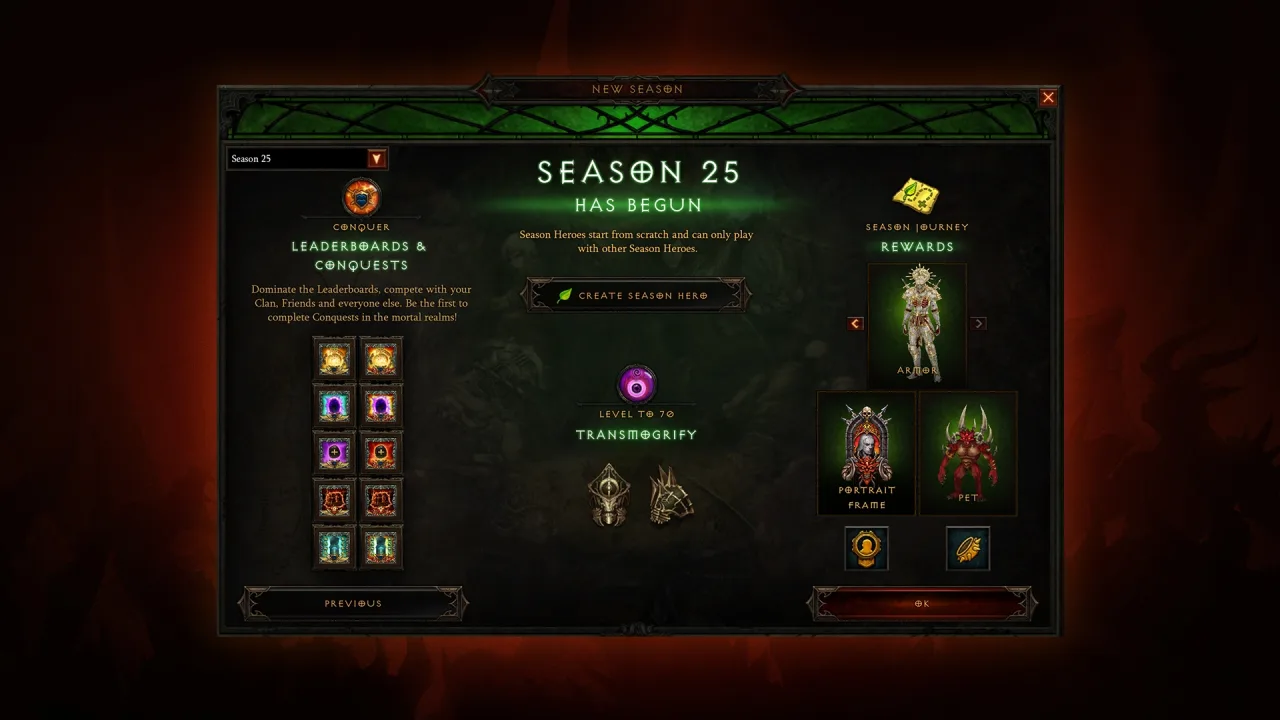
Thematically the season tied directly into the series' mythology. The three Prime Evils — Diablo (Terror), Mephisto (Hatred) and Baal (Destruction) — alongside the four Lesser Evils — Azmodan (Sin), Belial (Lies), Andariel (Anguish) and Duriel (Pain) — provided the narrative backbone. Each shard carried the name and essence of its demon, giving the theme a rare narrative cohesion.
The three Prime Evil shards (helm)
The helm shards defined a build's fundamental character:
- Sliver of Terror (Diablo): Your cooldowns are increased by 25%. For every skill on cooldown you take 12.5% reduced damage and deal 12.5% increased damage. A shard for cooldown-heavy builds that rewards deliberate skill rotations.
- Shard of Hatred (Mephisto): You deal 15% reduced damage while three or fewer enemies are within 25 yards. With more enemies, your damage rises by 5% per foe (up to 50%). The ideal shard for dense pulls and Greater Rift pushing.
- Fragment of Destruction (Baal): You move unhindered through enemies, marking each one you pass through with the Mark of Destruction. Perfect for mobile, plow-through play styles.
The four Lesser Evil shards (weapon)
The weapon shards supplemented your damage source and often came with drastic trade-offs:
- Essence of Anguish (Andariel): Each time you deal poison damage, you gain 5% cooldown reduction, movement speed and damage received for 10 seconds (max 10 stacks). A favorite of Witch Doctors and Necromancers.
- Stain of Sin (Azmodan): You deal 25% less damage, but killing an Elite spawns a pool of blood that increases damage non-elites take by 250%. A classic risk-reward shard.
- Dregs of Lies (Belial): Enemies you hit deal 33% less damage for 5 seconds — but your own damage drops by 50%. Pure defensive utility.
- Remnant of Pain (Duriel): Your Critical Hit Chance is reduced by 15%, but attacks against incapacitated enemies are automatically critical hits. Strong in builds heavy on crowd control.
Hellforge Embers and the corruption system
The real depth comes from the corruption system. Using a new season-exclusive consumable, the Hellforge Ember, each shard can be upgraded up to three times — one Ember per rank, so three Embers to fully max a shard. Every tier changed the shard meaningfully:
- Rank 1: unlocks augment-style bonuses (e.g. % Life, cooldown reduction, resource cost reduction, extra gold or experience).
- Rank 2: adds a primary-attribute augment (Strength, Intelligence, Dexterity, Vitality, All Resistances or reduced ranged damage).
- Rank 3: grants a second, randomly rolled unique property — this is where the big gamble lived.
Because the rank-3 property was random, upgrading became a tense gamble: a good roll could push a build into a new damage class overnight, while a bad one forced more Ember farming. That very uncertainty kept players grinding bosses for weeks.
Seasonal rules and limits
The shards were deliberately tied to the season:
- Cannot be traded, but can be salvaged or used in Caldesann's Despair
- Drops only in Seasonal play — no transfer to non-seasonal heroes when the season ends
- Full effect only through correct helm and weapon socketing
Impact on builds and classes
Because the shards worked independent of class, nearly every class found brand-new damage records. Witch Doctors and Necromancers benefited hugely from the Essence of Anguish, while crowd-control-heavy builds exploited the Remnant of Pain. The Shard of Hatred became the standard for dense Greater Rift pushing, and the Sliver of Terror revived cooldown-centric rotations. From Barbarians to Wizards, the community spent weeks experimenting with fresh combinations — the build diversity was exceptional.
Why Season 25 is remembered
Season 25 ran until April 10, 2022 and remains one of the most beloved themes in Diablo 3's history. Unlike pure buff seasons, the Soul Shards meaningfully changed the moment-to-moment feel of the game: they reshaped rotations, damage sources and build logic from the ground up, creating rare build diversity. The mix of a clear Lords of Hell fantasy, a risky corruption system and thoughtfully designed strength-and-weakness shards made this patch one of the most memorable season launches of late-era Diablo 3 — so popular that the theme returned multiple times in later repeating seasons.
 Login with Battle.net