
Season 30 'The Lords of Hell' launched on January 12, 2024 at 5 p.m. (PST/CET/KST), reviving a fan-favorite theme from Season 25: the Soul Shards. These powerful, gem-like items are based on the seven Lords of Hell of Sanctuary and grant your Nephalem demonic powers that shape the pace and playstyle of the entire season. This was no nostalgic side dish — it was the central selling point of a season that ushered Diablo 3 into a new, repetition-based phase of its life.
The return of a beloved theme
After several entirely new seasonal mechanics, Blizzard deliberately reached back to an established and popular system with Season 30. The Soul Shards were a highlight of Season 25, and their return also marked the official start of the new Season theme rotation. Blizzard announced that, going forward, "a series of iconic themes from Seasons past will be reintroduced roughly every three months." The reason: the Diablo 3 team no longer developed brand-new seasonal features, as studio resources had long shifted to Diablo IV. For veterans, Season 30 was a familiar reunion; for newer players, a first-time experience.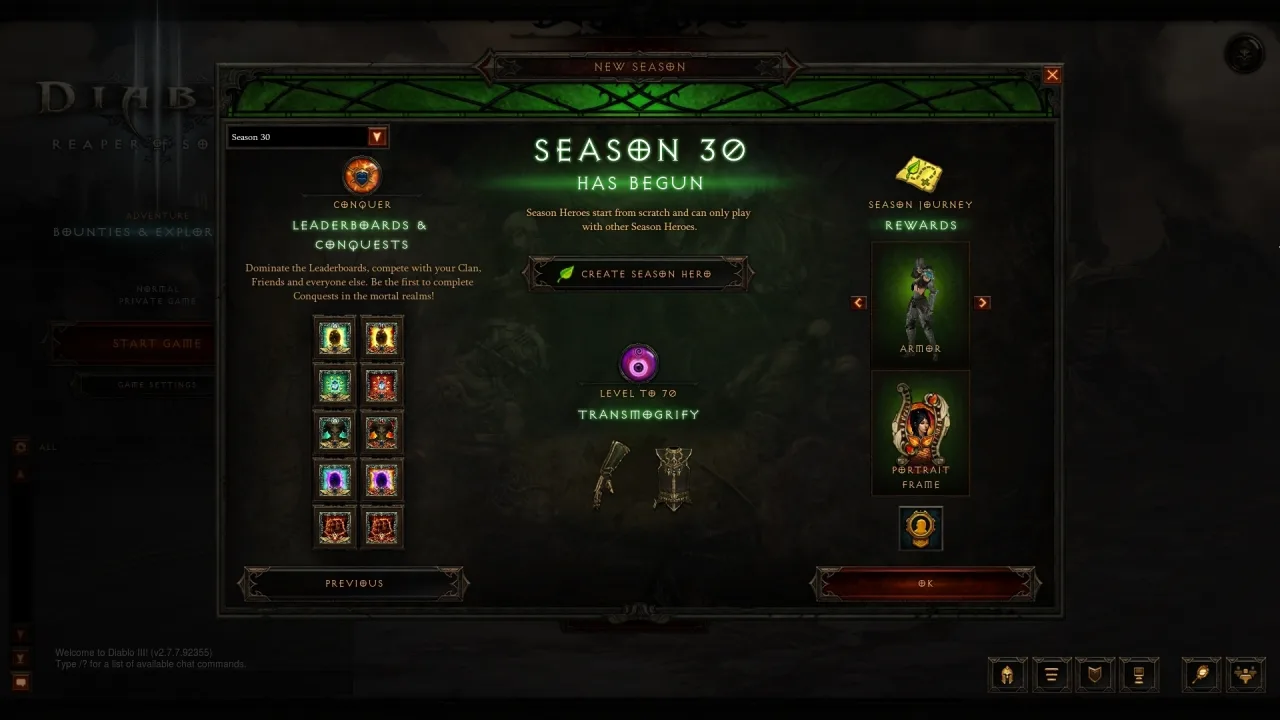
Season 30 marked the shift from innovation to curated repetition — the game was being maintained, no longer reinvented.
Importantly, Season 30 did not just bring back the shards. Two formerly seasonal themes became permanent base features of the game with this patch — the Rites of Sanctuary (Altar of Rites) from Seasons 24/28 and the Visions of Enmity from Season 28. Anyone playing Season 30 therefore had three reward systems running in parallel: shards, the Altar skill tree, and the portal-like mini-rifts.
Seven shards, two slots
You find and upgrade a total of seven unique Soul Shards, split into two categories:- 3 Prime Evil shards for the helm slot
- 4 Lesser Evil shards for the weapon slot
- You may only equip one shard per slot at a time, forcing a real choice
The Prime Evils (helm)
- Sliver of Terror: Increases your cooldowns by 25%, but for every skill on cooldown you take 12.5% less and deal 12.5% more damage — a cooldown balancing act for skill-heavy builds.
- Shard of Hatred: Weaker against few enemies, but up to 50% more damage when surrounded — ideal in rifts, problematic against a lone Rift Guardian.
- Fragment of Destruction: Lets you charge through enemies, marking them; each marked enemy that dies reduces your cooldowns by one second.
The Lesser Evils (weapon)
- Essence of Anguish: Poison damage stacks cooldown reduction and movement speed — but also damage taken (up to 10 stacks). This is the namesake risk-reward effect.
- Remnant of Pain: −15% crit chance, but guaranteed crits against hard-controlled (stunned, frozen, feared) enemies.
- Dregs of Lies: −25% of your own damage, +25% to your pets/minions — mandatory for pet builds like the summoner Witch Doctor.
- Stain of Sin: −25% damage, but after 50 enemy kills a blood pool spawns granting +150% elite damage for 15 seconds.
Hellforge Embers and forging power
The core of progression is the Hellforge Ember, a new season-exclusive consumable. With it, each shard can be advanced through a total of four ranks:- Rank 0 unlocks the unique legendary power with its built-in drawback.
- Rank 1 adds classic gem stats (damage, crit damage, life per hit; or life %, cooldown, resistances).
- Rank 2 grants a bonus affix such as attack speed, elemental damage, or damage reduction.
- Rank 3 unlocks three random additional legendary powers — the real build depth.
- Soul Shards and Hellforge Embers can drop anywhere in Sanctuary
- Bosses have a significantly higher chance to drop shards
- Shards cannot be traded, but can be salvaged or used for augments
- Both items drop only in Seasonal play and will not transfer to your non-seasonal characters
Growing power, lurking danger
With every upgrade the shards grow noticeably stronger — but most carry a deliberate drawback. The −25% damage penalties of Dregs of Lies and Stain of Sin are only harmless in the right builds; Essence of Anguish actively increases the damage you take. This risk-reward element isn't a bug but a design touch that reinforces the Lords of Hell theme: demonic power comes at a price.Master the mechanic and you'll be rewarded with massive pushes in Greater Rifts and big damage spikes. Combined with the now-permanent Altar of Rites (whose nodes hand out revives, set bonuses and resource regeneration among other things), builds in Season 30 reached a higher power ceiling than in many "ordinary" seasons.
Impact on the meta
The Soul Shards shifted the season's class meta noticeably. Pet classes benefited disproportionately from Dregs of Lies, while crowd-control-heavy builds used Remnant of Pain for reliable crits. Because both the helm and weapon slots carried their own active special power, build options opened up that simply didn't exist without shards — a rare case of a season theme genuinely reshuffling the rankings.Rewards and context
As usual, the standard seasonal rewards were added on top:- cosmetic items (portrait frame, pet, wings/banner rewards)
- the Season Journey set for completing the Journey chapters
- Haedrig's Gift with a complete class set across chapters II–IV
 Login with Battle.net